By Yashraj Bhardwaj

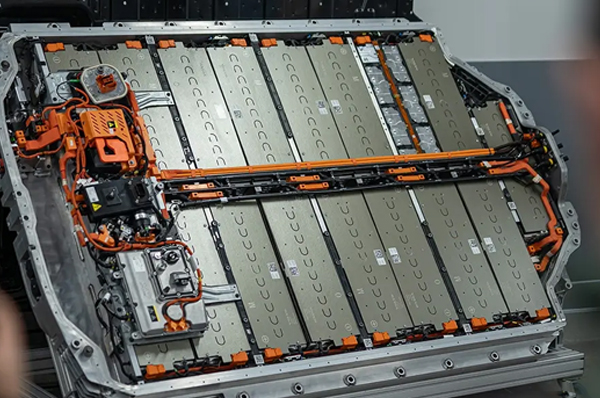
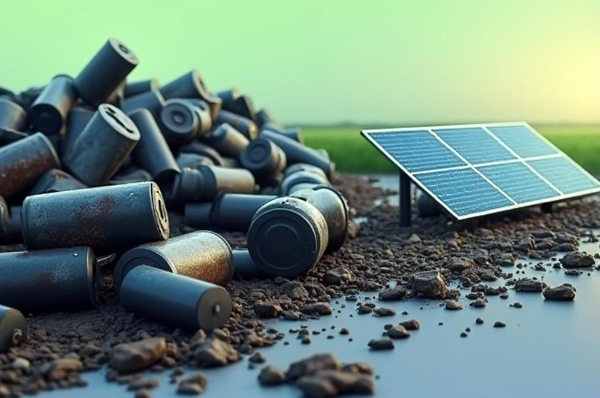
India’s EV market is racing ahead — nearly 2 million EVs were sold in 2024, with sales projected to push the industry to USD 113.99 billion by 2029. But as the country speeds into an electric future, one critical question looms large: what happens to the millions of EV batteries once their drive ends?

Here are six ways India can transform EV battery waste into a circular economy opportunity:

India’s EV market is racing ahead — nearly 2 million EVs were sold in 2024, with sales projected to push the industry to USD 113.99 billion by 2029. But as the country speeds into an electric future, one critical question looms large: what happens to the millions of EV batteries once their drive ends?

Here are six ways India can transform EV battery waste into a circular economy opportunity:

By Yashraj Bhardwaj, Co-Founder & CSO, Plannex Recycling

India’s EV market is racing ahead — nearly 2 million EVs were sold in 2024, with sales projected to push the industry to USD 113.99 billion by 2029. But as the country speeds into an electric future, one critical question looms large: what happens to the millions of EV batteries once their drive ends?

Here are six ways India can transform EV battery waste into a circular economy opportunity:

By Yashraj Bhardwaj, Co-Founder & CSO, Plannex Recycling

India’s EV market is racing ahead — nearly 2 million EVs were sold in 2024, with sales projected to push the industry to USD 113.99 billion by 2029. But as the country speeds into an electric future, one critical question looms large: what happens to the millions of EV batteries once their drive ends?

Here are six ways India can transform EV battery waste into a circular economy opportunity:

By Yashraj Bhardwaj, Co-Founder & CSO, Plannex Recycling

India’s EV market is racing ahead — nearly 2 million EVs were sold in 2024, with sales projected to push the industry to USD 113.99 billion by 2029. But as the country speeds into an electric future, one critical question looms large: what happens to the millions of EV batteries once their drive ends?

Here are six ways India can transform EV battery waste into a circular economy opportunity:

By Yashraj Bhardwaj, Co-Founder & CSO, Plannex Recycling

India’s EV market is racing ahead — nearly 2 million EVs were sold in 2024, with sales projected to push the industry to USD 113.99 billion by 2029. But as the country speeds into an electric future, one critical question looms large: what happens to the millions of EV batteries once their drive ends?

Here are six ways India can transform EV battery waste into a circular economy opportunity:

By Yashraj Bhardwaj, Co-Founder & CSO, Plannex Recycling

India’s EV market is racing ahead — nearly 2 million EVs were sold in 2024, with sales projected to push the industry to USD 113.99 billion by 2029. But as the country speeds into an electric future, one critical question looms large: what happens to the millions of EV batteries once their drive ends?

Here are six ways India can transform EV battery waste into a circular economy opportunity:

India’s EV market is racing ahead — nearly 2 million EVs were sold in 2024, with sales projected to push the industry to USD 113.99 billion by 2029. But as the country speeds into an electric future, one critical question looms large: what happens to the millions of EV batteries once their drive ends?

Here are six ways India can transform EV battery waste into a circular economy opportunity:

India’s EV market has picked up remarkable momentum, with nearly two million electric vehicles hitting the roads and a 20% increase in sales in 2024 alone. A shift in consumer preferences has fuelled this growth, along with stronger government incentives, expanded charging infrastructure, and a greater acceptance of cleaner, greener mobility.

Choosing an EV now comes with numerous advantages, ranging from tax breaks and lower operating costs to lower emissions and maintenance. With the Indian EV market expected to reach USD 113.99 billion by 2029, the country is rapidly emerging as a global leader in the electric vehicle sector. However, as we accelerate our transition to electrification, one critical question arises: What happens to an EV battery after its life on the road?